

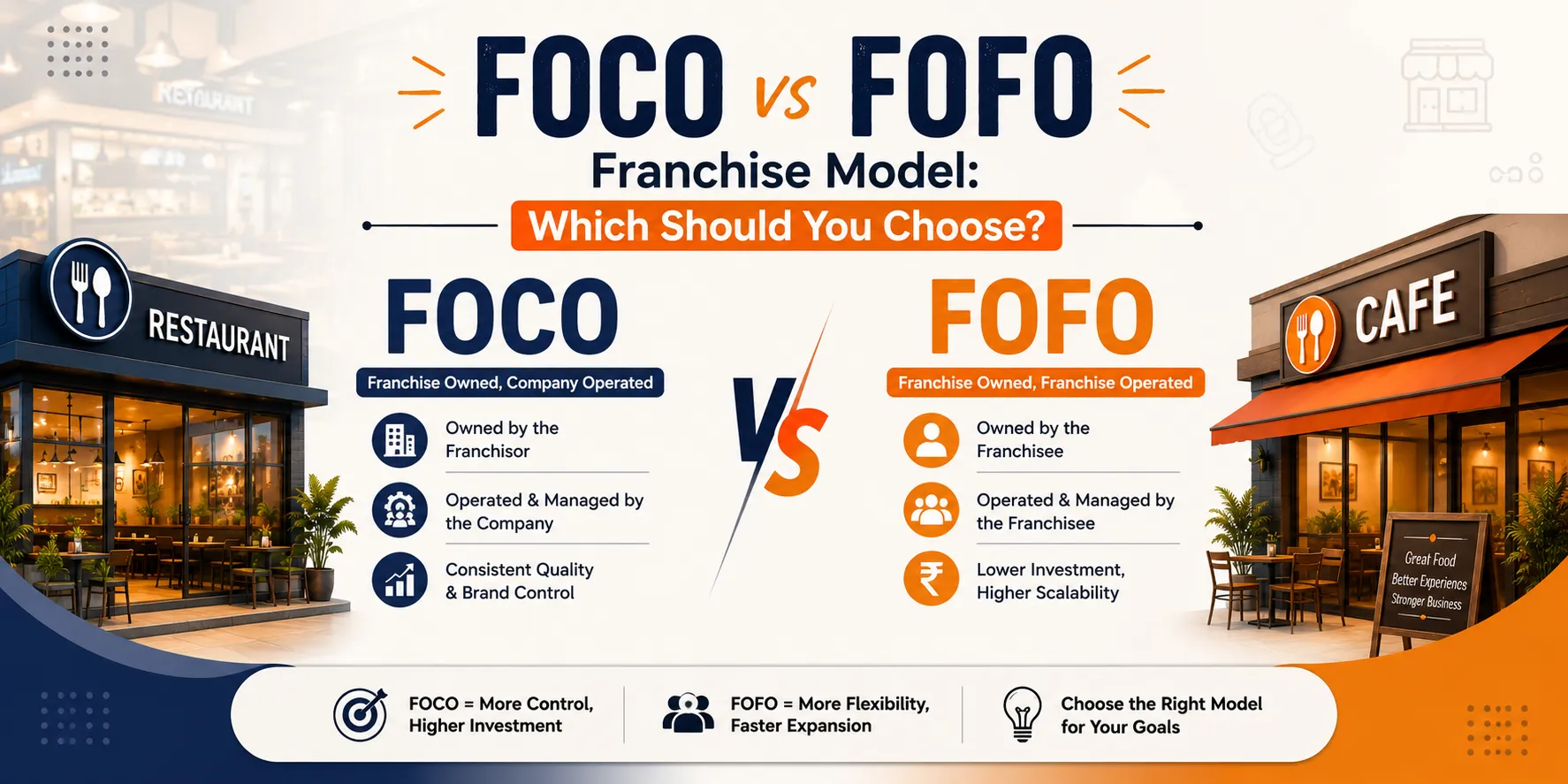
Franchise operating models are a huge part of the investment decision. These models decide who is responsible for running the outlet after the investment has been made, FOCO vs FOFO Franchise Model: Which Should You Choose? Two models that are commonly discussed in this light are Franchise Owned, Company Operated (FOCO) and Franchise Owned, Franchise Operated (FOFO).
It is significant for investors to know the difference between the two as they can have a direct impact on costs, customer experience, and profitability.
The FOCO Franchise Model
In this model franchise operating model, the franchisee invests in and owns the franchise. But the daily operations are carried on by the franchisor or its operating company. Therefore, the franchisee invests the capital needed to establish the outlet and the operating company manages:
- Day-to-day operations
- Staffing and training
- Product and menu standards
- Adherence to brand standards
- Operational supervision
FOCO should also not be considered a passive investment contrary to what it seems. The investor still needs to be up-to-date on how the business operates, how the operating company is compensated, how is the financial of the business reported, and the responsibilities that the owner holds.

The FOFO Franchise Model
In the FOFO model, both the responsibilities of operating the outlet and ownership remain with the franchise. The franchisor can provide brand name, systems, training, operational framework, and any other agreed upon support. The franchisee manages the actual business and is responsible for:
- Hiring and managing employees
- Daily operations
- Service standards
- Local marketing
- Cost management
- Adherence to brand standards
The FOFO model exposes the franchisee directly to the challenges of running a business while providing greater control. If the franchisee has hospitality experience, this model will be most suitable for them.

FAQs
1. What is the difference between FOCO and FOFO franchise models?
In the FOCO (Franchise Owned, Company Operated) model, the franchisee owns the outlet but the franchisor's operating company handles daily operations. In the FOFO (Franchise Owned, Franchise Operated) model, the franchisee both owns and operates the outlet, with the franchisor providing brand systems, training, and support.
2. Which is better, FOCO or FOFO?
Neither model is universally better — the right choice depends on the investor's available time, hospitality experience, and desired level of involvement. FOCO suits investors with capital but limited operational experience, while FOFO suits those who want direct control and have hospitality management experience.
3. Is the FOCO model a passive investment?
No. Even though daily operations are handled by the operating company, FOCO investors still need to stay informed about business performance, compensation structures, financial reporting, and their own responsibilities as the outlet owner.
4. What financial factors should I check before choosing a FOCO or FOFO model?
Investors should evaluate the total investment required, operational fees, revenue-sharing structure, royalty terms, staff management responsibilities, and maintenance costs — since these can vary significantly between individual franchise agreements, even within the same model type.
FOCO v/s FOFO: Which one should the investor choose?
We cannot say that either model is better than the other. The appropriate model can only be decided after seeing the extent to which either model is suitable to the investor as well as how much they want to participate in the business.
For someone with less time or limited hospitality experience but significant capital, a FOCO model would be more preferable. The major responsibility of operations remains with the company and they handle the daily working. On the other hand, someone who is an experienced hospitality operator, a FOFO model offering better control and participation in the outlet would be favourable.
The financial details of the project such as the amount of investment, the operation fee, revenue sharing model, royalty staff management, and maintenance cost should also be looked into carefully. Moreover, investors should not presume that all FOCO or FOFO structures have the same characteristics. They can vary based on the terms agreed upon in the franchise agreement.
For high value investments in cafes, lounges and restaurants, the model of operations can affect the whole outlet and investor’s business strategy. And hence, investors evaluating franchising opportunities must carefully do due diligence.
Book a free consultation with us to understand FOCO and FOFO models.

More News & Blogs

The Investment Guide for Baardos Franchise
Complete investment guide for Baardos La Citta franchise cost, space, royalty & payback period from Brands and Branches.

How Much Does It Cost to Open a Food Franchise?
Food franchise costs range from ₹1.25 Cr to ₹5 Cr+. See the full breakdown by brand & format from Brands and Branches.

How Much Profit Can You Make From a Bar Franchise?
Bar franchise profit depends on location and management. See payback periods, revenue streams and costs from Brands and Branches.